
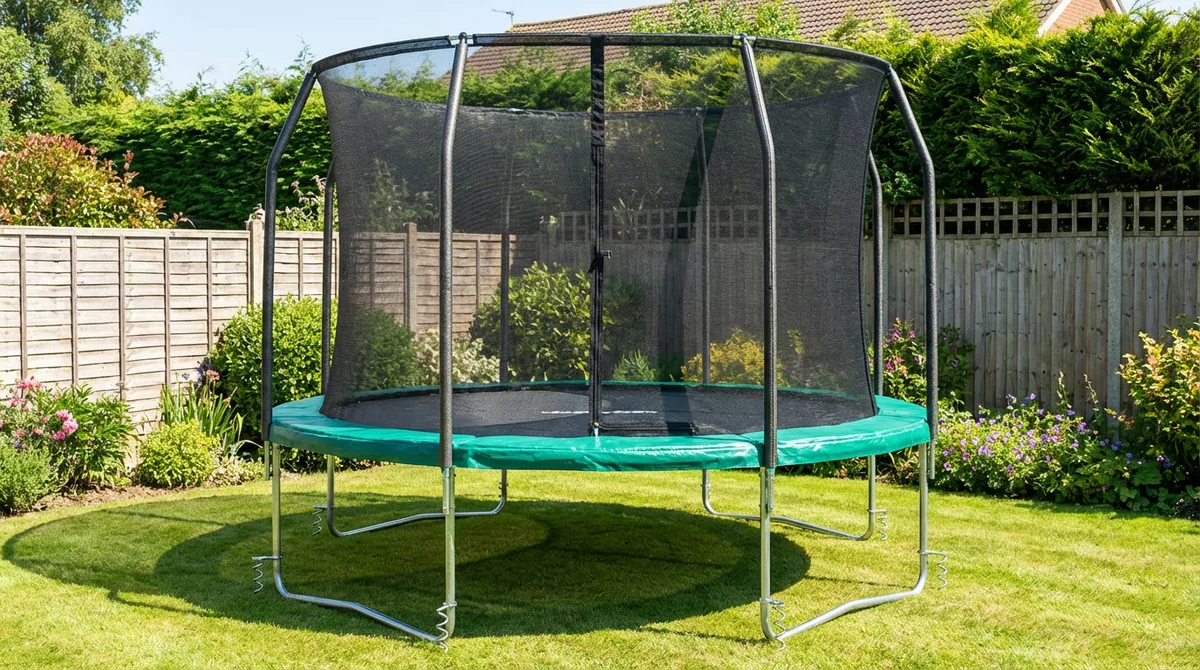
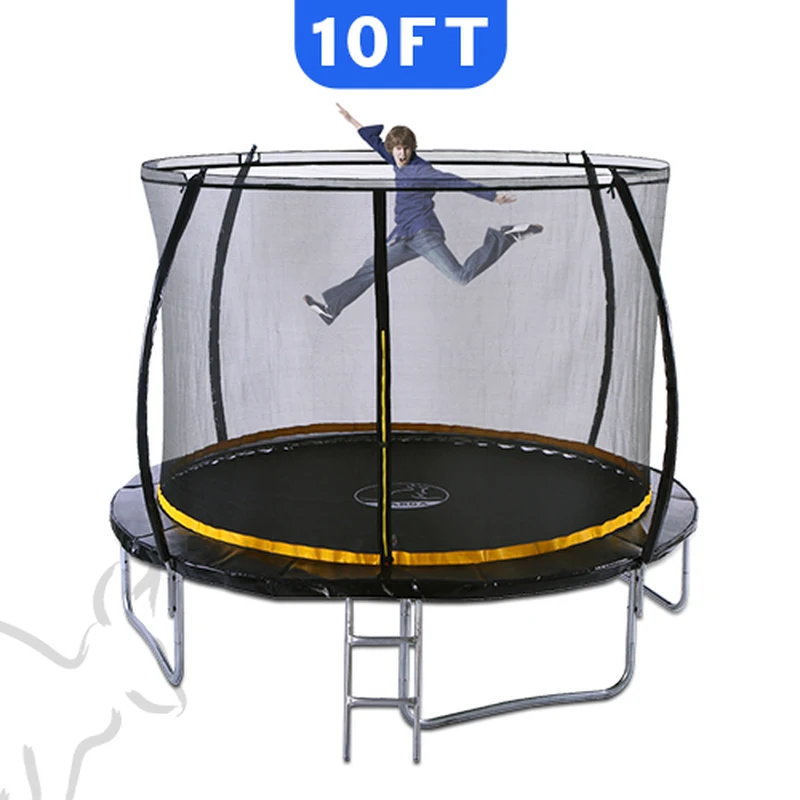
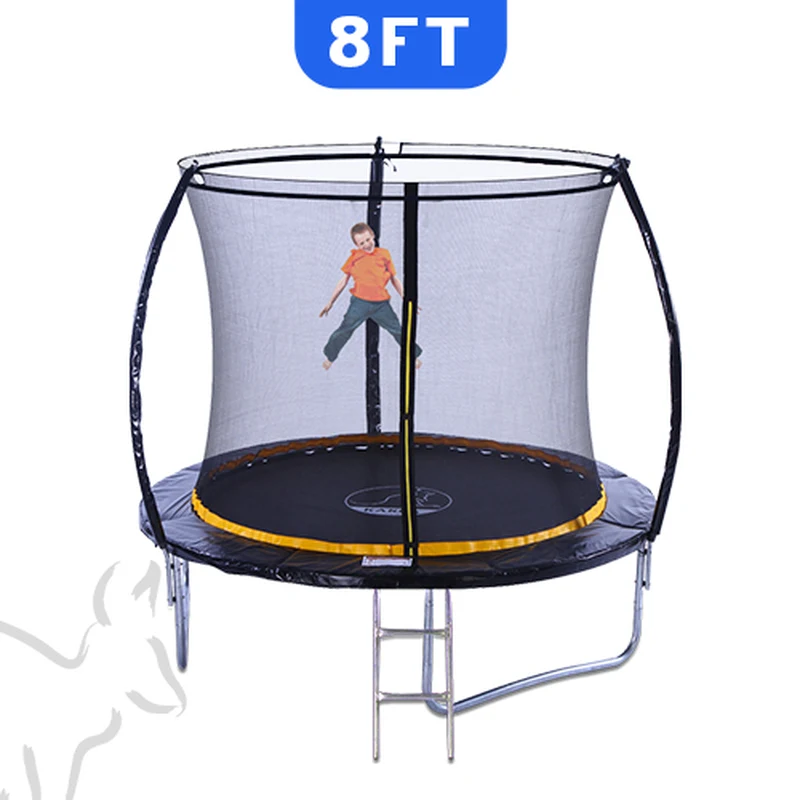
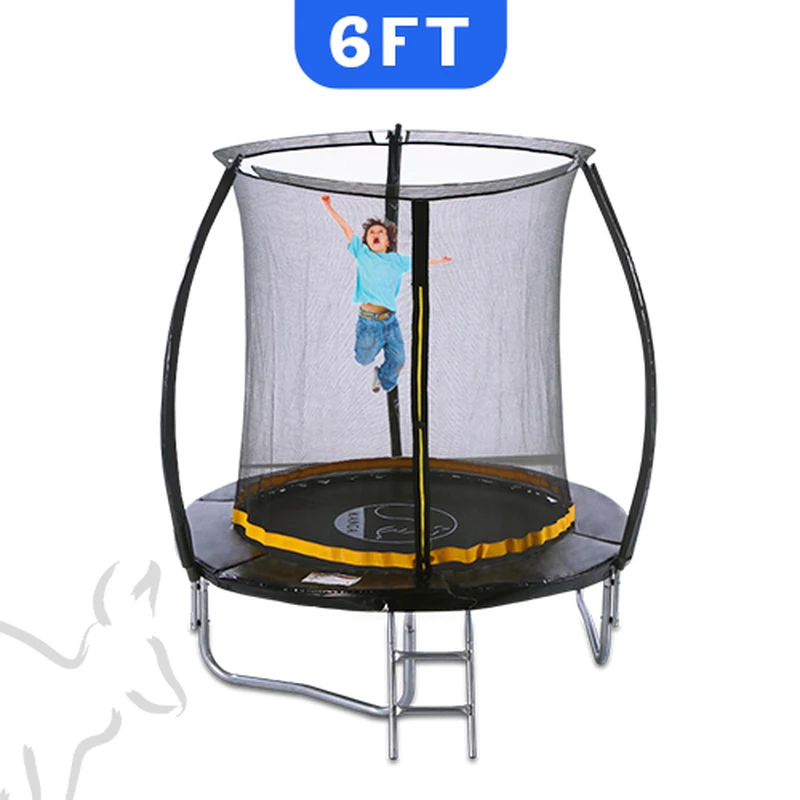
The 10ft Kanga Trampoline is where garden trampolines stop feeling like children's equipment and start feeling like genuine apparatus. Ten feet of jump surface is enough for a deep, slow bounce that most adults will recognise from school gym trampolines – softer on the knees, more generous with bail-out space, and able to handle a wider weight range than the 6ft and 8ft.
Who the 10ft Kanga suits
Jumpers roughly seven years old through to teenagers are the core audience, along with adults who just want to bounce for fitness without feeling cramped. Maximum user weight is in the 100kg region depending on the production run – always check the printed load panel inside the enclosure rather than relying on a listing. The 10ft is also the smallest Kanga that comfortably accommodates a jumper learning proper inversions (which, for the record, we suggest only ever attempting on a properly anchored trampoline with a trained supervisor).
What ships in the 10ft Kanga Package
Inside the box: a galvanised steel frame with six or eight legs (depending on the build), 64 to 72 heavy-duty springs, the UV-treated polypropylene jumping mat with reinforced triangular stitching, a thick padded spring cover, the external safety net enclosure with padded poles and a zipped entrance, a free ladder and the ground anchor kit. It is the same complete-kit philosophy as the 6ft and 8ft, scaled up for the larger footprint.
Why frame tubing matters more at 10ft
Larger mats put more leverage on the frame, and in a windy British garden the enclosure net acts like a sail. The 10ft Kanga responds with thicker tube walls – typically 1.7mm to 2mm on the main ring – and a higher number of legs to spread the load. Hot-dip galvanising covers inside and outside surfaces, so the classic failure mode of cheap steel trampolines (internal rust cratering through to the outside after three winters) is simply not in play here.
Garden footprint and siting
You will need a 12ft by 12ft clear area on the ground, with 1.5 to 2 metres of overhead clearance and at least that much sideways. The legs splay slightly outside the frame diameter, and the enclosure poles add another inch or two. If you are placing the trampoline against a fence line, leave room to mow behind it; nobody wants to un-anchor a 10-footer to get at the grass.
As with every Kanga, a level lawn is strongly preferred. On slight gradients the splayed legs can be shimmed with plastic levelling discs, but a genuinely sloped garden changes the bounce direction and increases the chance of a jumper exiting the mat awkwardly. Anchor kits should be driven into firm ground; during prolonged wet weather check them after any storm.
Assembly guidance
Assembly typically takes three to five hours for two people, with the mat installation taking the longest. A spring pull tool is included; working in pairs across opposite sides of the frame keeps the tension even. The enclosure poles go up once the mat is attached, and the padded sleeves slide over the poles before the net is hooked into place. Our step-by-step instructions include diagrams for each stage.
Everyday use and maintenance
A 10ft Kanga asks for very little once assembled. Brush leaves off the spring cover weekly during autumn, check the zipped entrance for grit, and re-tension the anchor straps after the first heavy storm of each year. The spares catalogue stocks every consumable, from individual springs to a full mat and enclosure refresh. Typical frame life is well beyond a decade; pads and mats are replaced on a three-to-six-year rhythm depending on how often the trampoline is used.
When to go for the 12ft instead
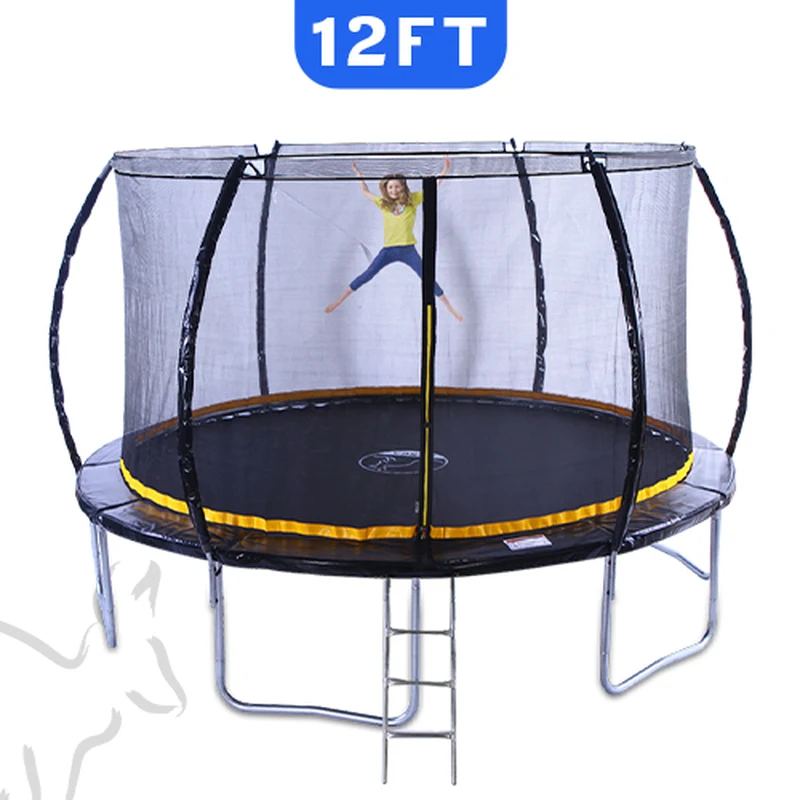
If two jumpers routinely share the trampoline, or if an adult wants proper bounce height, the 12ft Kanga is the natural upgrade. The 10ft remains the default family answer – enough room to grow into, not so much that the lawn disappears.
10ft Kanga quick FAQ
How much does the assembled 10ft weigh? Typically 45–55kg once fully built, depending on the production run. That weight, combined with the anchor kit, is what keeps the frame grounded in strong British winds.
What maximum user weight is safe? The 10ft Kanga is rated at around 100kg for the current build; always check the load panel inside the enclosure for the exact figure for your production run. Exceeding the rated weight accelerates spring fatigue without immediately causing visible damage.
Can the 10ft stay out through winter? Yes. Galvanised tubing handles rain and frost without issue. The jumping mat and enclosure net are more UV-sensitive than cold-sensitive; they survive British winters comfortably but will eventually need replacement, which is a spares purchase rather than a trampoline replacement.