
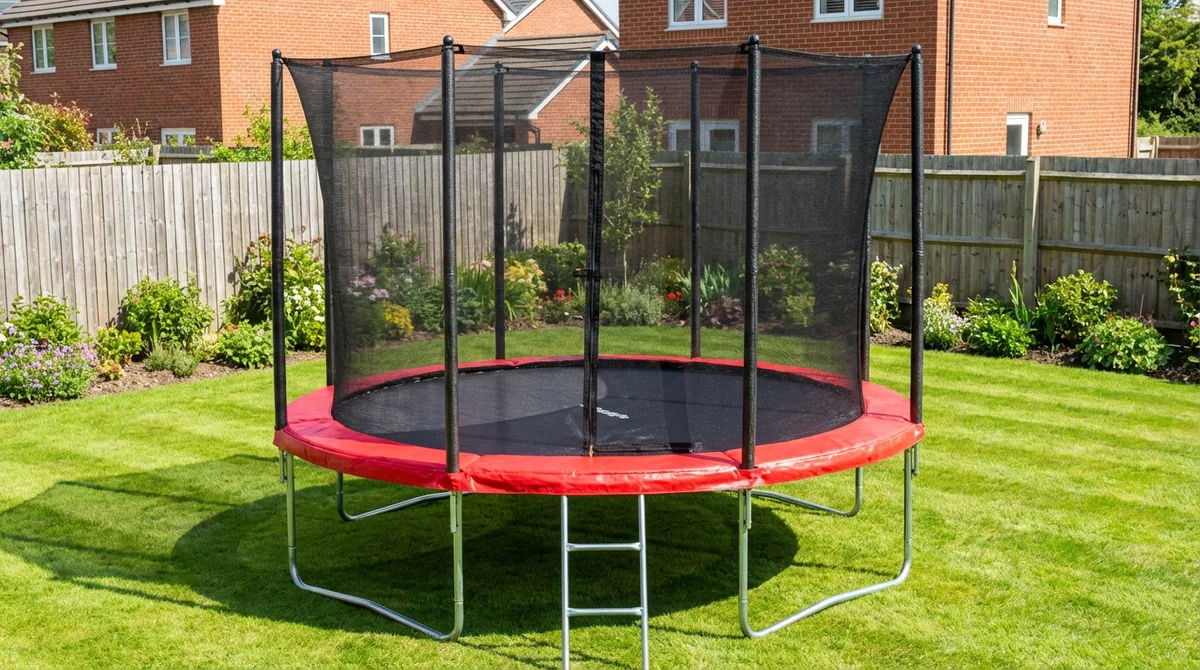
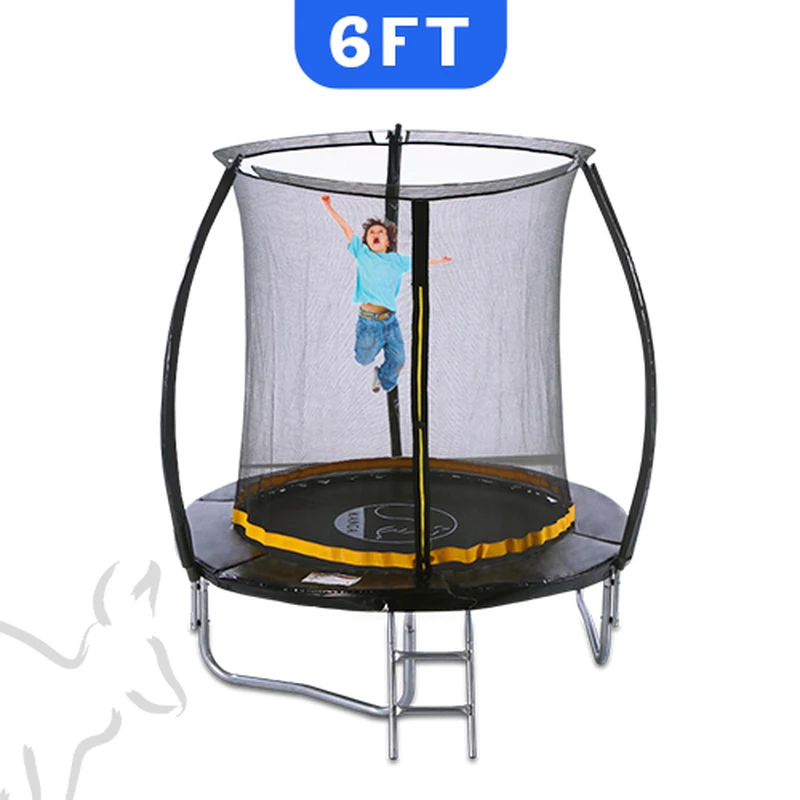
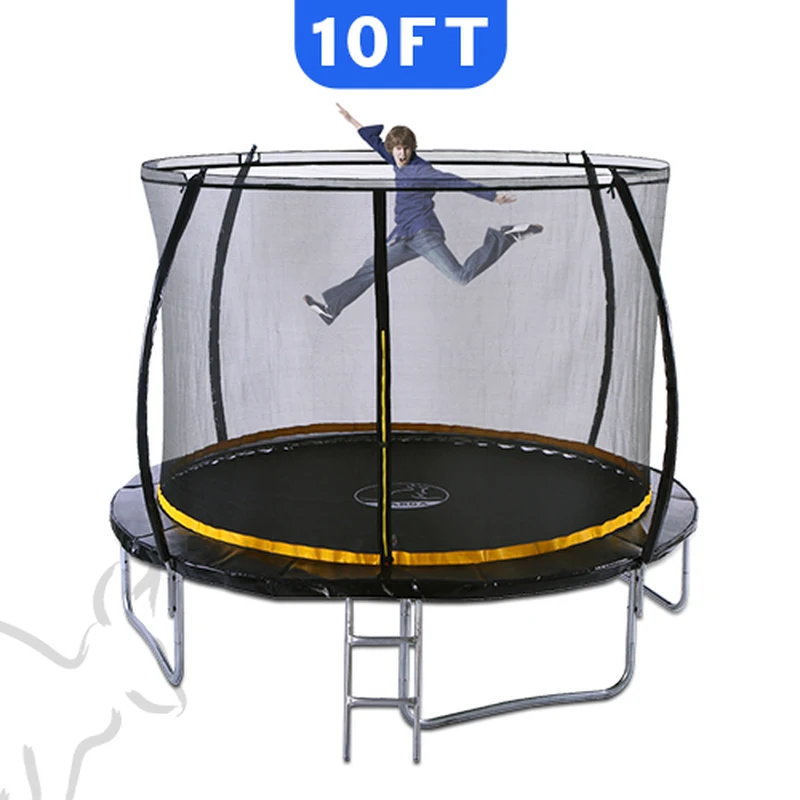
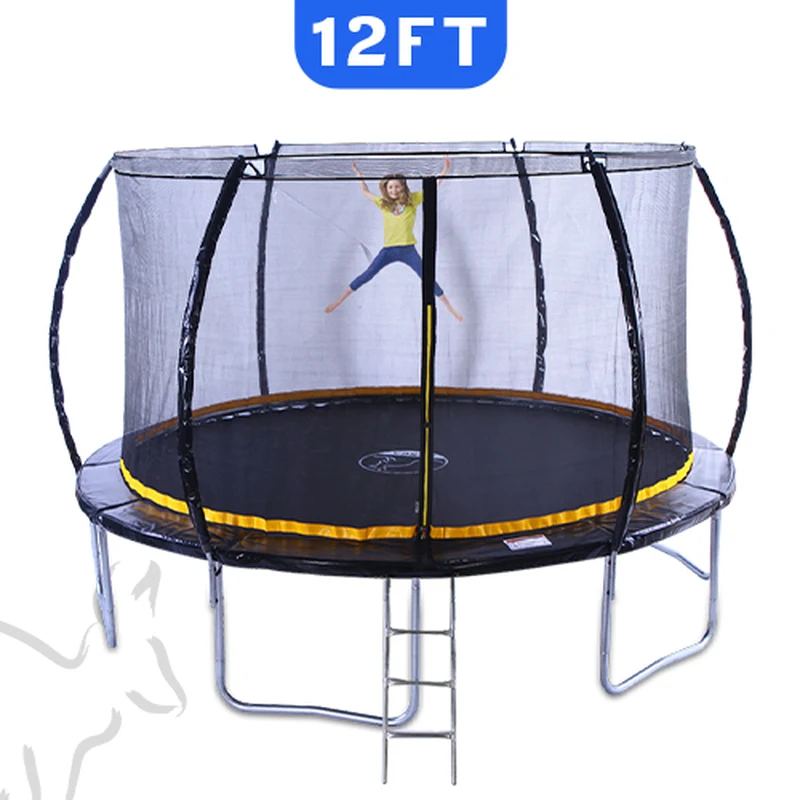
The 6ft Kanga Trampoline is the smallest in the range and it exists for a very specific reason: most British gardens do not have room for a 12-footer, and most families with young children do not need one either. A 6ft mat gives pre-schoolers and infant-school age jumpers enough surface area to bounce safely, while leaving enough lawn for a paddling pool, a barbecue and a patch of turf that is not in permanent shade. In a country where the average back garden is under 200 square metres, that compromise matters – a trampoline that takes over the entire garden rarely stays loved past its first summer.
Who the 6ft Kanga is for
The sweet spot is jumpers aged roughly three to eight years old, up to around 45kg. Anyone heavier will bottom out the springs fairly quickly, which is uncomfortable rather than dangerous but shortens the life of the mat. Families sometimes ask whether adults can test the trampoline; the answer is a gentle bounce in the middle is fine, but proper adult jumping belongs on the 10ft or 12ft.
If you are buying for a first-time jumper, the 6ft also doubles as a confidence-building unit. The smaller mat keeps the child closer to the spring cover edge at all times, so parents and children can see the safe zone without having to shout across a cavern of enclosure net.
What is in the Kanga Package
The 6ft Kanga Package contains the galvanised steel frame in labelled sections, a set of high-tension springs (typically 36–42 on this size), the polypropylene jumping mat, a padded foam-and-PVC spring cover in a bright accent colour, the external safety net enclosure with three support poles and padded sleeves, a zipped entrance, a short steel ladder and the ground anchor kit with corkscrew pegs and webbing straps. There is nothing left to buy before the first jump.
Garden footprint
The 6ft measures its frame diameter, not the total footprint; once the legs splay outward and the net poles rise, you should allow around 8ft by 8ft of clear ground and at least 1.5m of overhead and side clearance. That rules out placing it under low apple trees, but is otherwise tolerant of most back-garden layouts.
The trampoline sits on grass best; it can be used on a level patio if the pavers are in good condition and the anchor kit is switched for a paving-slab-compatible strap system. Never place it on a sloped lawn without shimming the legs – even a modest gradient turns a gentle bounce into a one-way trip to the hedge.
Assembly and maintenance
Two adults can put a 6ft Kanga together in a long afternoon, with the spring-pulling step being by far the slowest. The included pull tool is not optional; fingers are no match for steel springs under tension. Once assembled, the ongoing routine is light: brush leaves off the spring cover weekly, check the zip of the enclosure for grit once a month, and re-tension the anchor straps after the first big autumn storm of each year. Our assembly and safety guide walks through each step.
When to consider sizing up
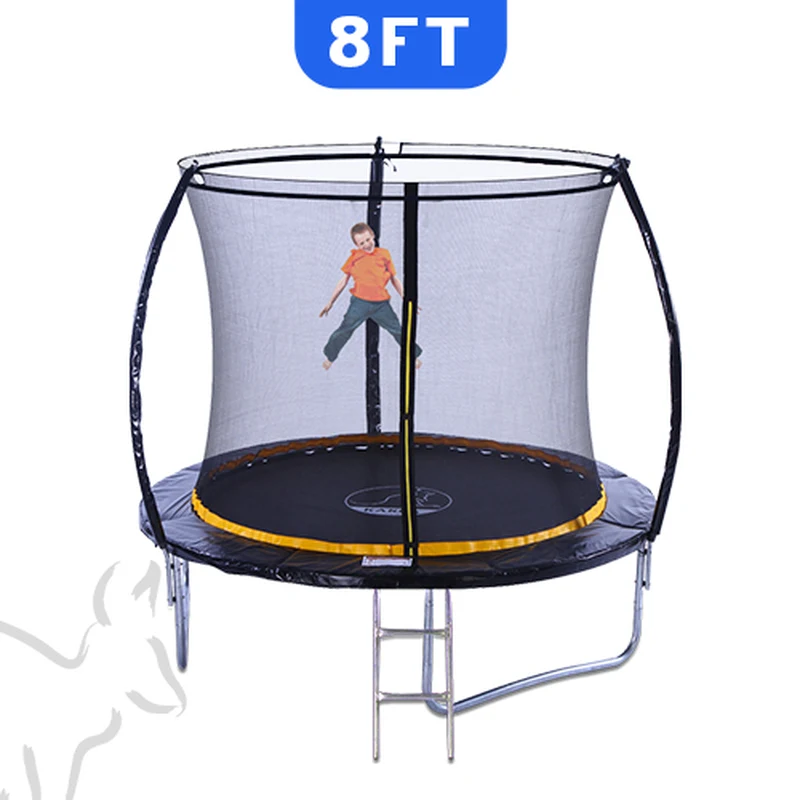
If your child is already a confident jumper, has siblings who want to share the space, or is approaching the nine-year-old mark, the 8ft Kanga is the natural next step. The 8ft has the same safety features and a fairly similar footprint allowance, but the jump surface is materially bigger and the spring count goes up, which means a deeper, slower bounce that is more forgiving on joints.
The 6ft remains the right answer if garden space is tight, if the jumper is young, or if this is the family's first trampoline and you are not sure how much it will get used. It is not a toy, but it is the least committed size in the range – in a year or two, spares and replacement mats stay in the catalogue, so the unit can continue to serve as an entry point even if the next sibling comes along.
6ft Kanga quick FAQ
Can the 6ft go on a concrete patio? It can, provided the surface is level and you switch the corkscrew ground anchors for paving-slab straps. Note that shock load is higher on hard surfaces; use only with children and avoid heavy bouncers.
Is a safety net strictly necessary? Yes. Even on a 6ft mat, an off-centre bounce can deposit a child onto the springs or over the edge. Every Kanga Package ships with the external enclosure as standard, and you should not bounce without it.
How loud is a 6ft Kanga in use? Noticeably quieter than a full-size trampoline. The shorter springs cycle faster and the frame radiates less sound, so most neighbours do not notice it from over a garden fence.