
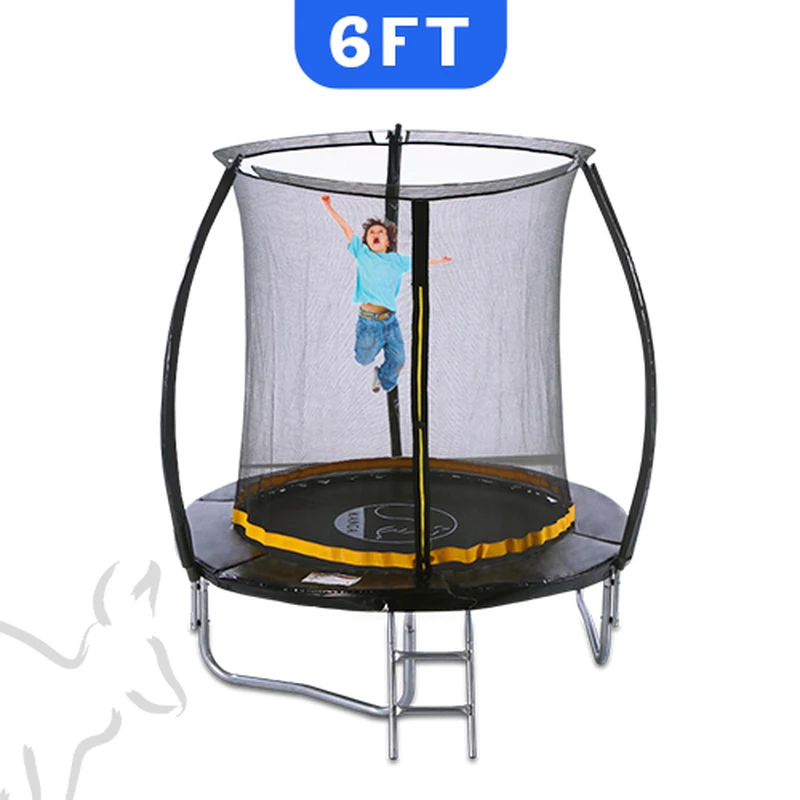
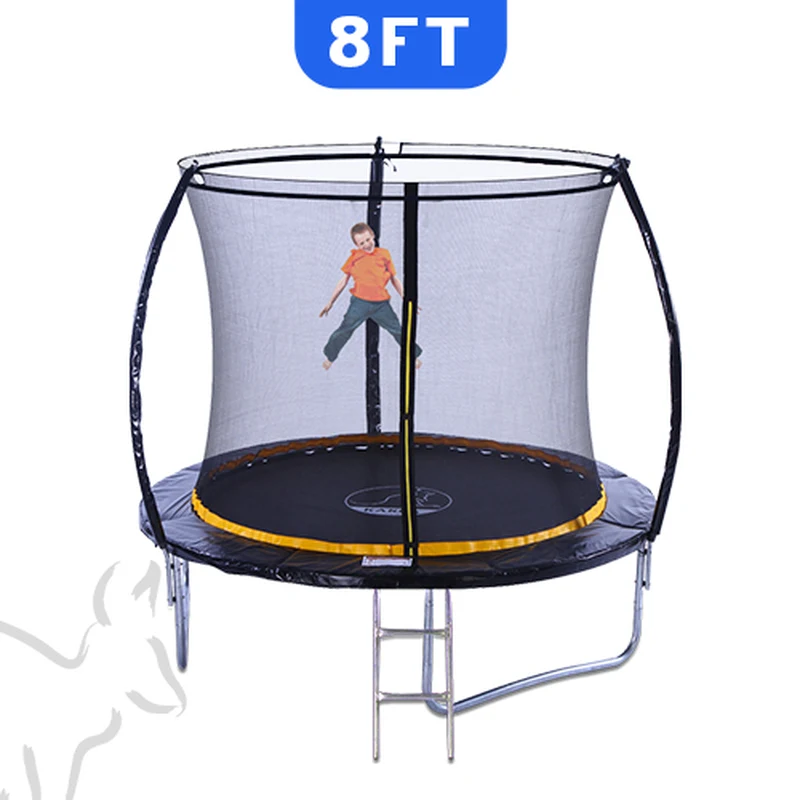
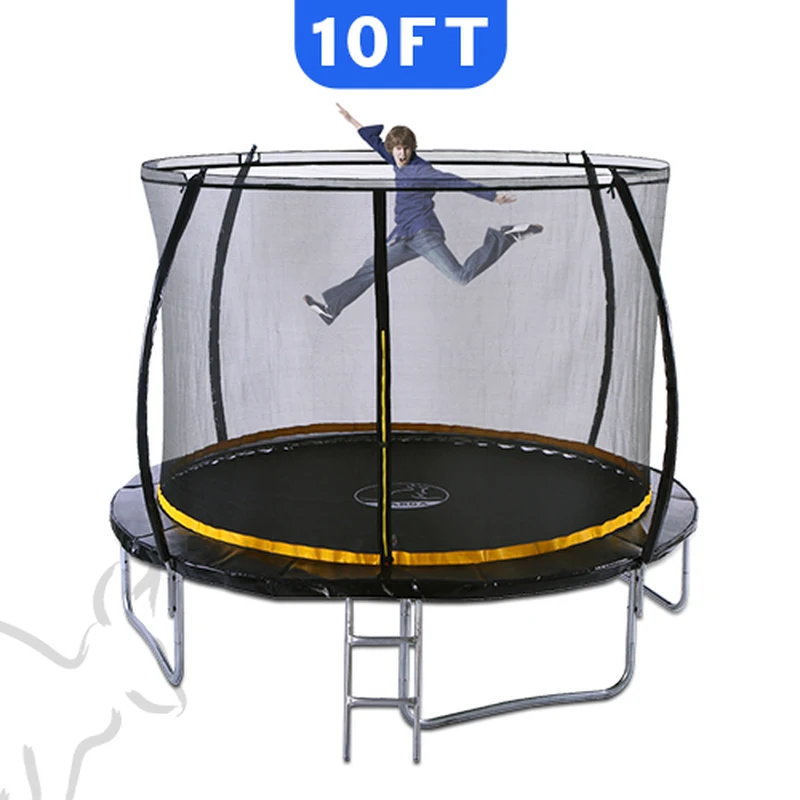
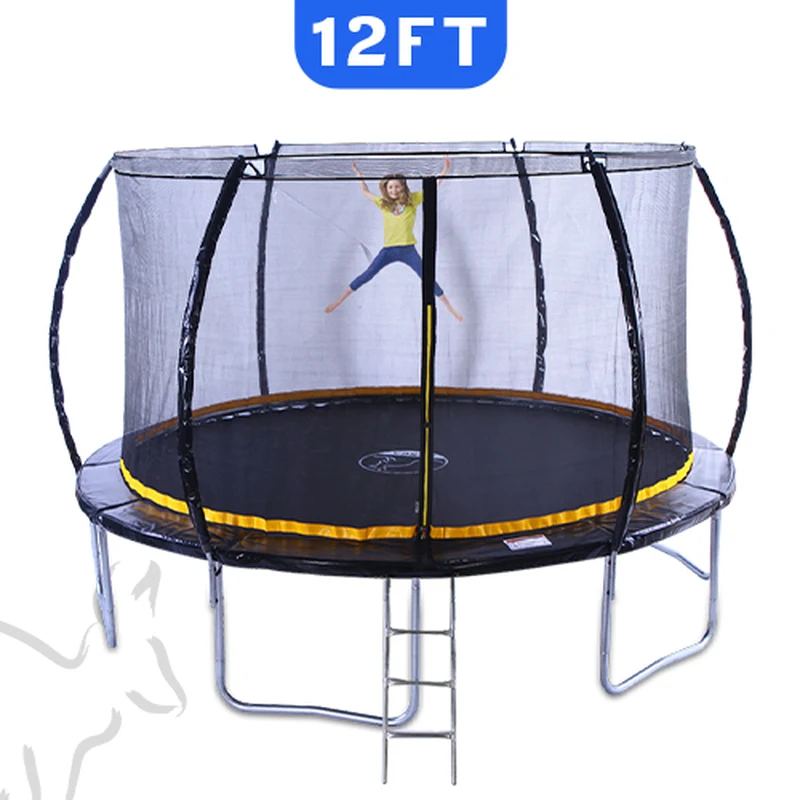
This page is a practical, non-marketing summary of how to assemble, use and maintain a Kanga Trampoline. It is not a substitute for the printed manual that ships inside every Kanga Package, but it covers the routines most often skipped or misunderstood.
Before you open the box
Check the garden first. You need a level patch of lawn at least 2ft wider than the trampoline's nominal size on every side, with 1.5 to 2 metres of overhead clearance. Washing lines, low tree branches, sheds and greenhouse panels should be kept well away – a lively jumper can reach surprising heights inside the enclosure.
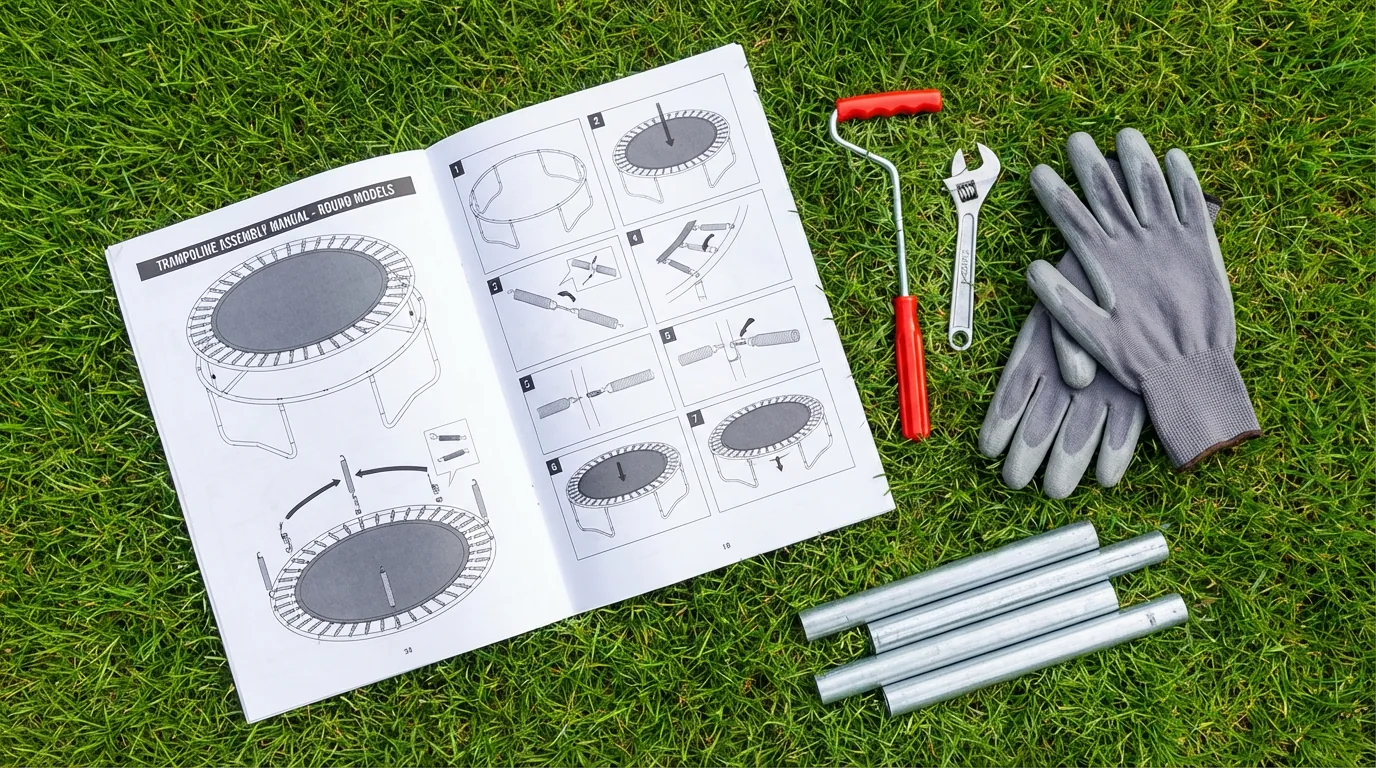
Lay out the ground area with canes before unpacking. Sort the parts against the packing list; it is far easier to realise a bag is missing before the frame is half-built than after. Keep the printed manual and the spring pull tool on hand at all times.
Frame assembly (step one)
The frame goes together from the labelled sections. Legs connect to the top rail via T-junctions; do not fully tighten any bolt until every section is in place. Once the circle is closed, walk around the frame, gently tapping each T-junction with the palm of your hand, and then go back and finish-tighten every bolt. This two-pass approach prevents the "lopsided ring" problem that can otherwise force you to dismantle half the frame.
Mat and springs (step two)
Stretch the mat inside the frame so the spring rings are roughly equidistant from the frame on every side. Using the spring pull tool, attach the first spring at the 12 o'clock position, then the 6 o'clock spring opposite it, then 3 o'clock and 9 o'clock, and only then begin filling in between. This star pattern keeps the mat tension even. Working sequentially around the rim almost always produces a visibly off-centre mat that has to be undone and redone.
Springs should be attached with the hooks on the frame side closed downward, so enthusiastic bouncers cannot accidentally snag on them. Fingers can and will get caught by slipping springs if you are careless with the pull tool – treat the tool like a screwdriver used in anger, not a casual hand tool.
Spring pad and enclosure (step three)
The padded cover drops over the springs and ties to the frame at spaced intervals. Tie every loop; half-tied pads lift in the wind. The external safety net enclosure is built around vertical support poles that slide into sleeves on the frame; slide the padded pole sleeves on before raising the poles, otherwise you will have to dismantle and rebuild that part.
Net panels hook onto the pole tops and tie to the mat or spring cover at the base. Leave the zipped entrance facing away from prevailing winds and towards your house, so children enter and leave in view.
Ground anchor kit (step four)
The anchor kit is the single most important installation step in British weather. Drive each corkscrew peg into firm ground at a 60-degree angle away from the frame, then thread the webbing strap over the frame and back to the peg. Tension the strap so the webbing is tight but not loaded. Check the anchor straps after the first autumn storm each year; replace any peg that has bent.
Safe use, everyday
One jumper at a time is the single rule that reduces trampoline injuries more than any other. Shoes off. Nothing sharp in pockets. Zipped entrance closed during use. Supervise younger children; do not let very young users bounce unsupervised regardless of how confident they look. Tumbling and flips are an advanced skill and should only be attempted under trained supervision on a properly anchored trampoline.
Weekly and seasonal maintenance
Brush leaves and twigs off the spring pad weekly. Check the zip of the enclosure for grit monthly – grit is what eventually chews zips to death. Re-tension the anchor kit after the first significant storm of autumn. Inspect springs annually for rust rings and elongation; replace springs in pairs on opposite sides of the frame. Every three to four years budget for a new spring pad; every five years expect the enclosure net to need replacing. Every consumable part is stocked in the Kanga spares catalogue.
Winter storage options
In most of the UK the trampoline stays outside year-round. If you prefer to strip it down for winter, remove the mat and enclosure net and store them dry and folded; leave the frame standing, anchored, with the spring pad on. The frame is galvanised and weatherproof; it is the fabrics that suffer most in winter rain if they are not protected. Full disassembly every winter is rarely worth the effort.