
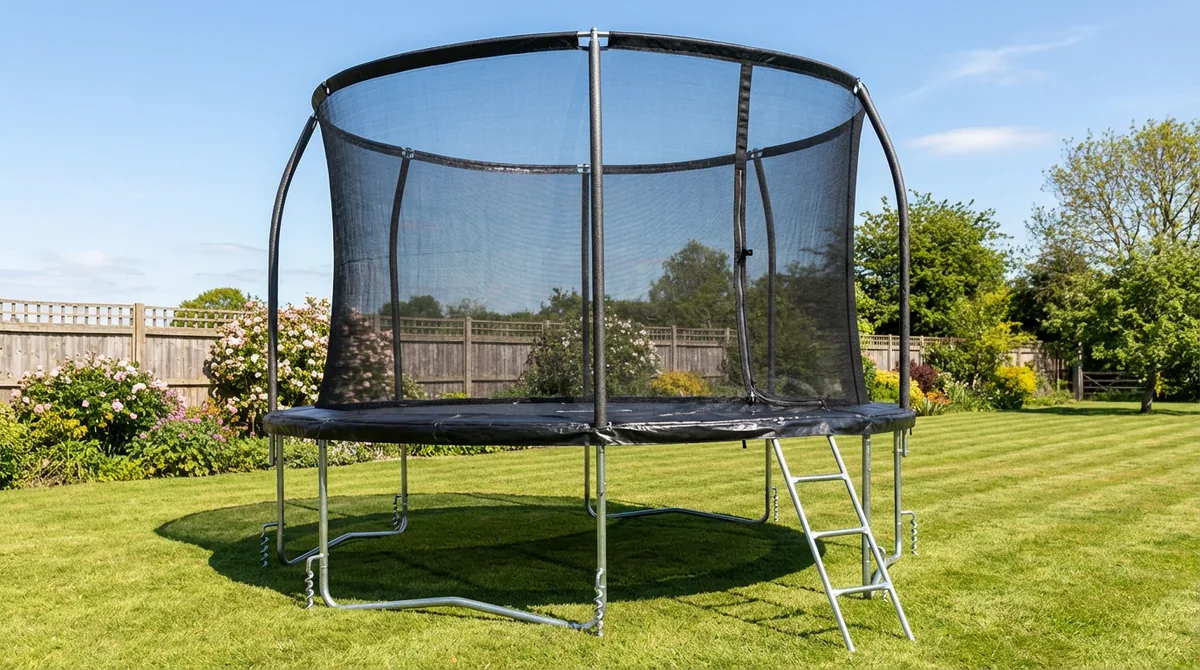
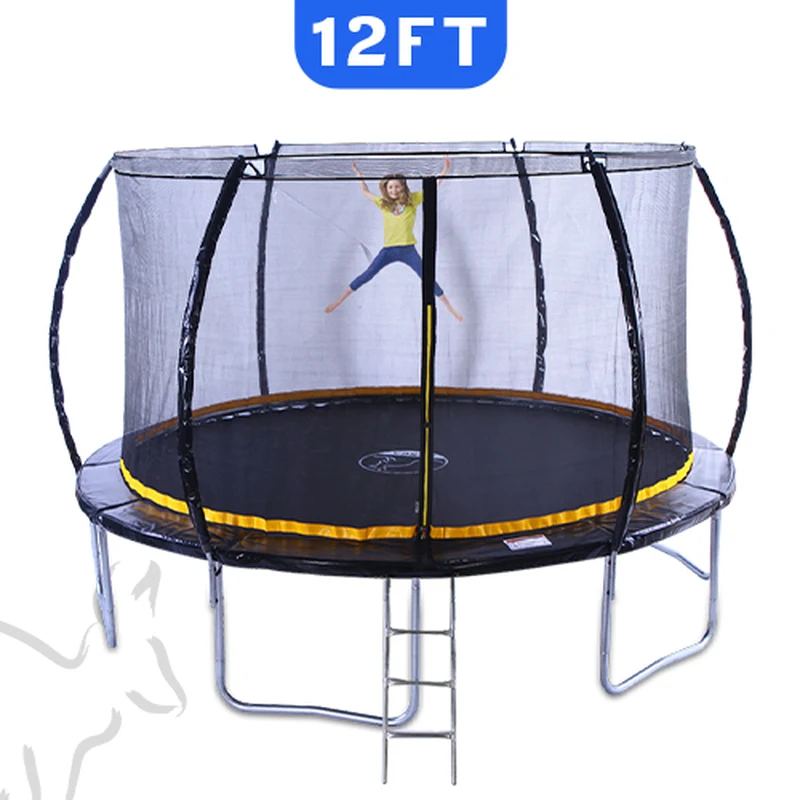
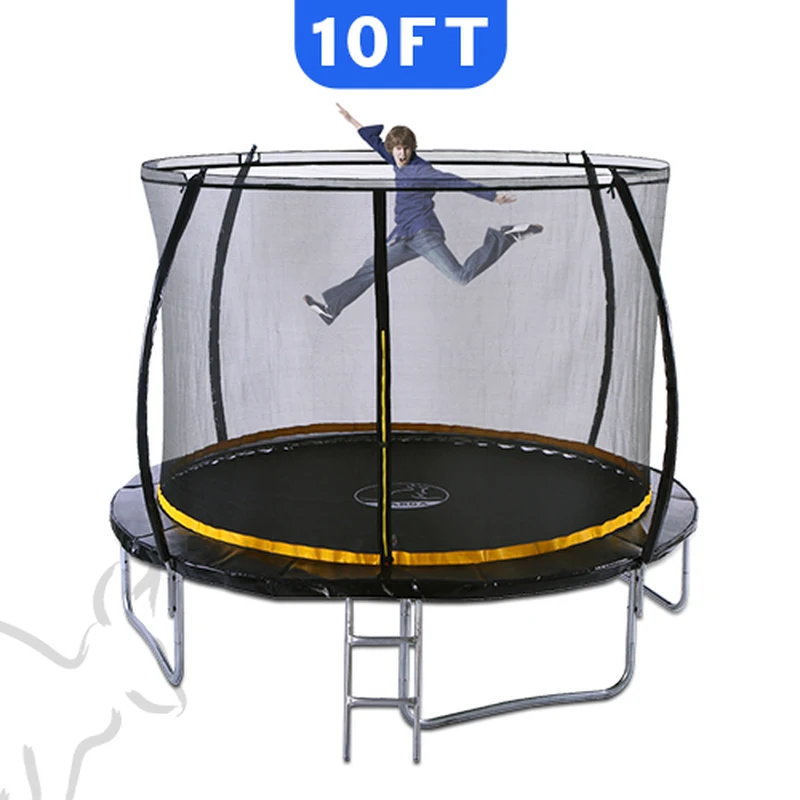
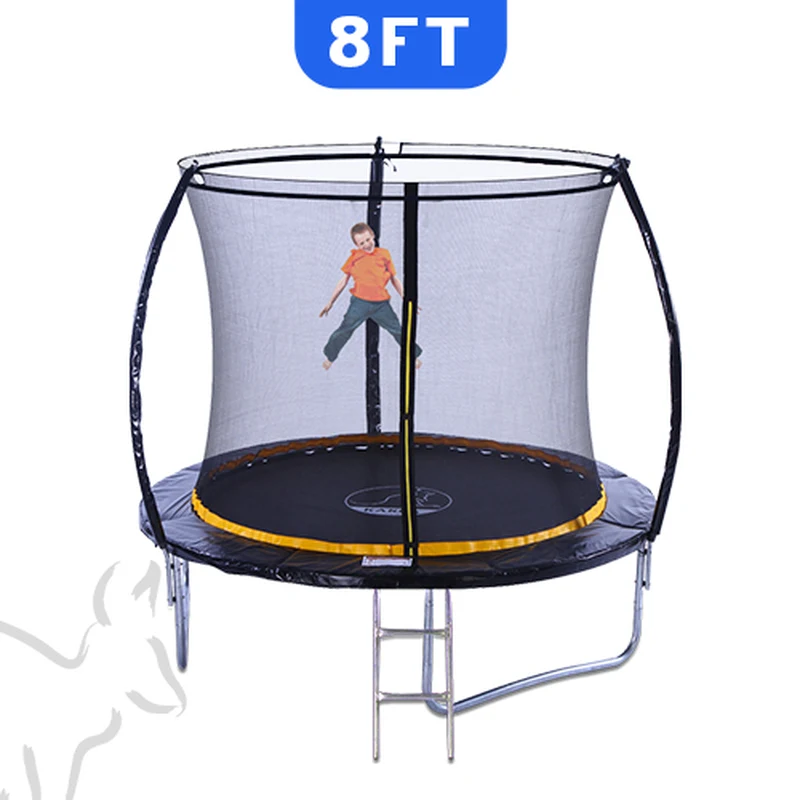
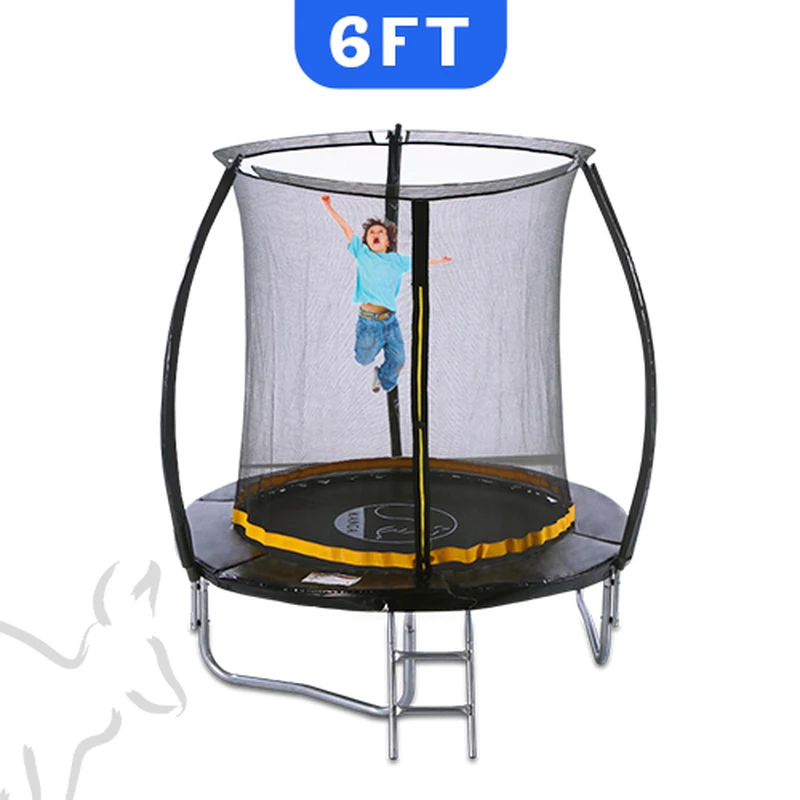
The 12ft Kanga Trampoline is the full-size member of the range. At twelve feet of jump surface, the mat is large enough that an adult can take three running steps and still be within the safe central bounce zone, and the spring count is high enough that the bounce is long, slow and comfortable.
Who the 12ft Kanga is for
Families with older children, teenagers and adults who all want to use the trampoline are the natural audience. Maximum user weight is typically 110–120kg on Kanga 12ft builds – check the printed load panel inside the enclosure for the current run. The 12ft also suits households where siblings will use the trampoline turn and turn about; the larger mat gives each jumper more recovery space between bounces, which matters more than most buyers expect.
What the 12ft Kanga Package includes
The box ships with a galvanised steel frame with eight legs and reinforced top rail, 72 to 96 heavy-duty springs, a UV-treated polypropylene jumping mat with triangular safety stitching, a thick foam-and-PVC spring cover, the external safety net enclosure with eight padded poles, a zipped entrance, a hooking ladder and the ground anchor kit. As with every Kanga size, none of this is an optional extra – it is simply the Kanga Package.
Frame and tubing
The 12ft uses 2mm wall hot-dip galvanised tubing on the primary ring and the enclosure risers, with stress points reinforced by double tube sections at the leg junctions. Galvanising protects both inner and outer surfaces; that is the difference between a frame that survives a decade outdoors and one that fails from the inside out in year three. Welds are inspected at the factory and stress-tested before pack-out.
How much garden you actually need
A 12ft Kanga needs a 14ft by 14ft flat clear area as a minimum, with 2 metres of clearance on every side and overhead. This is the size that most commonly gets squeezed into gardens that are too small for it – the result is either a trampoline under a tree (a recipe for endless leaf clearing) or a trampoline against a fence (which takes the mower's nap away). Measure honestly before ordering, and if in doubt step down to the 10ft.
Assembly and set-up
Assembly is the longest of the four sizes. Allow four to six hours with two competent adults. The frame goes together quickly; the mat takes time because the spring count is high and the tension is correspondingly stiff. Pull the mat onto the frame in an alternating pattern (north, south, east, west, then halfway between each), never in sequence around the rim – this keeps the mat evenly seated and prevents lopsided tension. The assembly guide covers the star-pattern in detail.
Anchoring a 12-footer properly
The safety net enclosure on a 12ft catches a lot of wind, so the ground anchor kit is not optional in the British climate – it is the single most important installation step. The corkscrew pegs should be driven in at a 60-degree angle away from the frame, and the webbing straps tensioned until they flex only slightly under hand pressure. Check the anchors after the first autumn storm each year and replace any peg that bends.
Living with the 12ft Kanga
The 12ft will dominate whichever corner of the garden it sits in, but it also becomes the part of the garden that gets used most. Daily routines are the same as for the smaller Kangas: brush the pad, check the zip, keep shoes off the mat and keep the anchor kit tight. Consumable parts (mat, springs, pads, enclosure net) are all stocked in the Kanga spares catalogue. The frame is built to outlast everything bolted to it.
12ft Kanga quick FAQ
Is the 12ft too much trampoline for a single child? Not necessarily – the bigger mat simply means a softer, deeper bounce, which is often easier on joints than a smaller high-spring-tension trampoline. The real question is garden footprint rather than single-jumper use.
How heavy is the boxed 12ft on delivery day? The flat-pack weight is usually around 80kg, split across two or three cartons. Plan to have two adults available when the courier arrives, and consider manoeuvring the packages to the intended garden spot before unboxing.
Do I need professional installation? No – thousands of 12ft Kangas are self-installed every season. Allow four to six hours with two competent adults, follow the star-pattern spring fitting, and the job is well within a capable DIY weekend. Our instructions page covers the bits that catch out first-timers.