
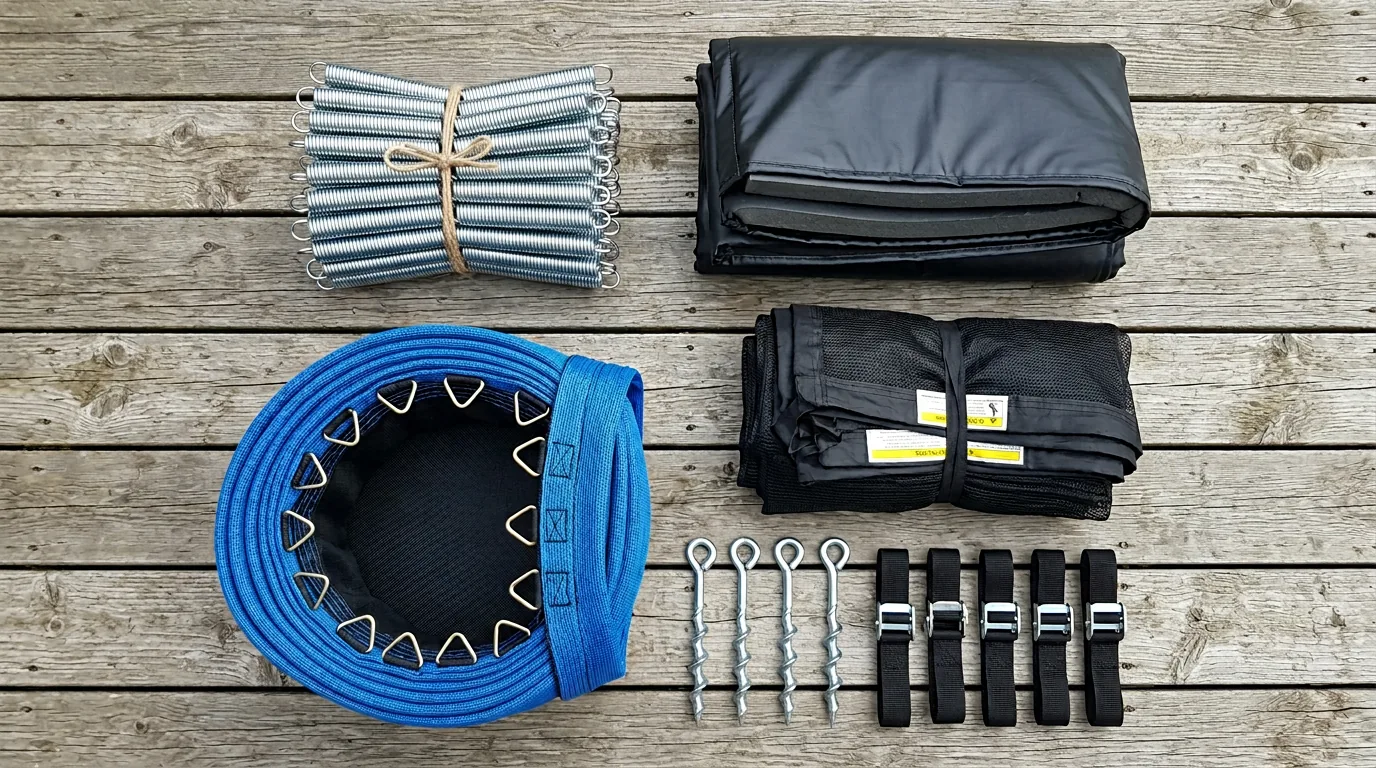
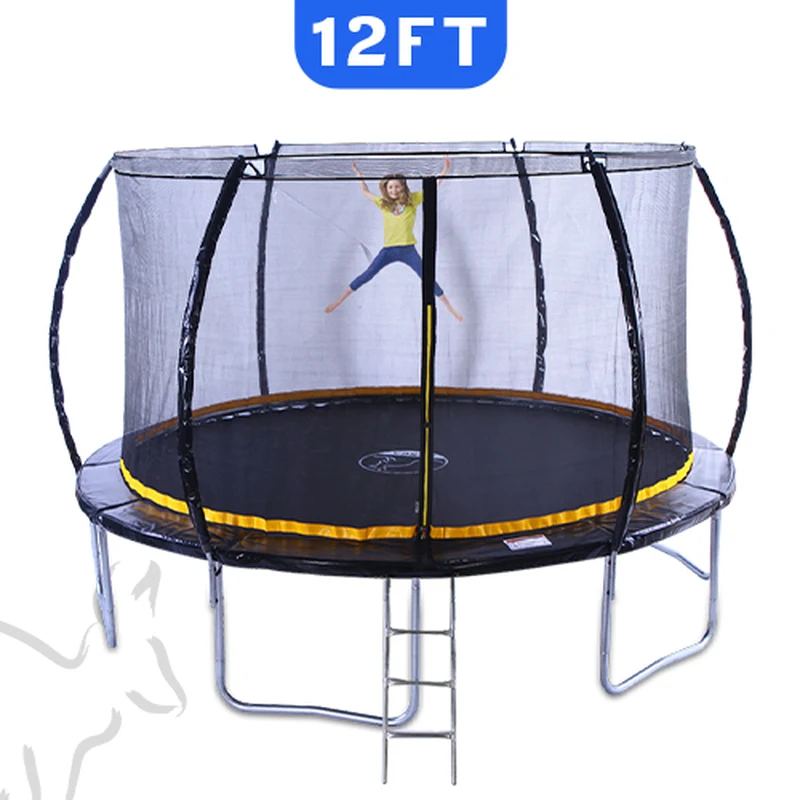
Frames are built to last; mats, springs, pads and nets are consumables. The Kanga range deliberately treats spare parts as first-class citizens, so a Kanga trampoline should need replacement components long before it needs replacing as a whole unit. This page describes the parts that are available and how to identify when each one is due.
Replacement springs
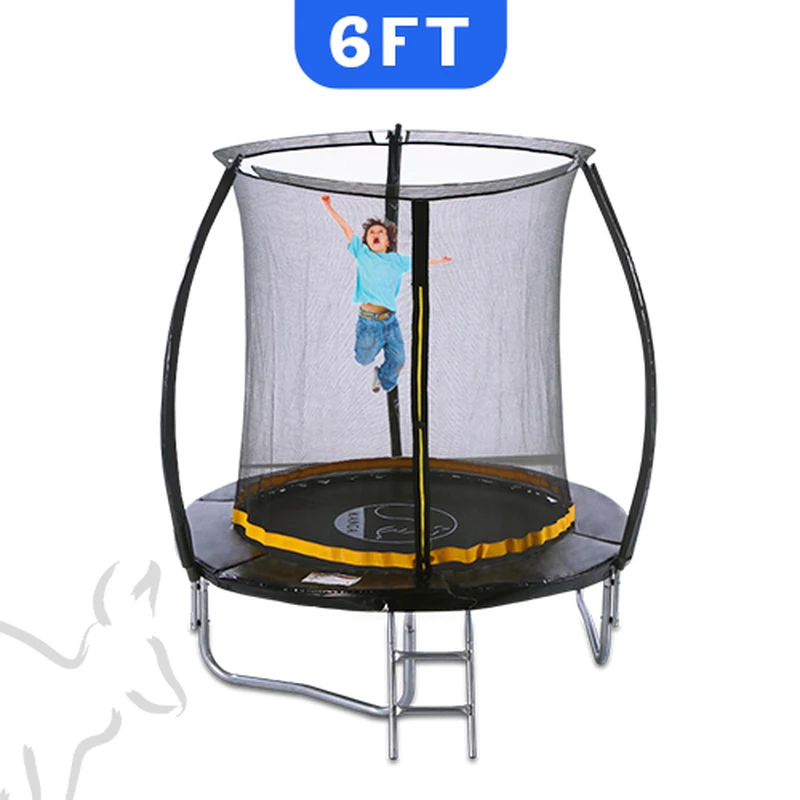
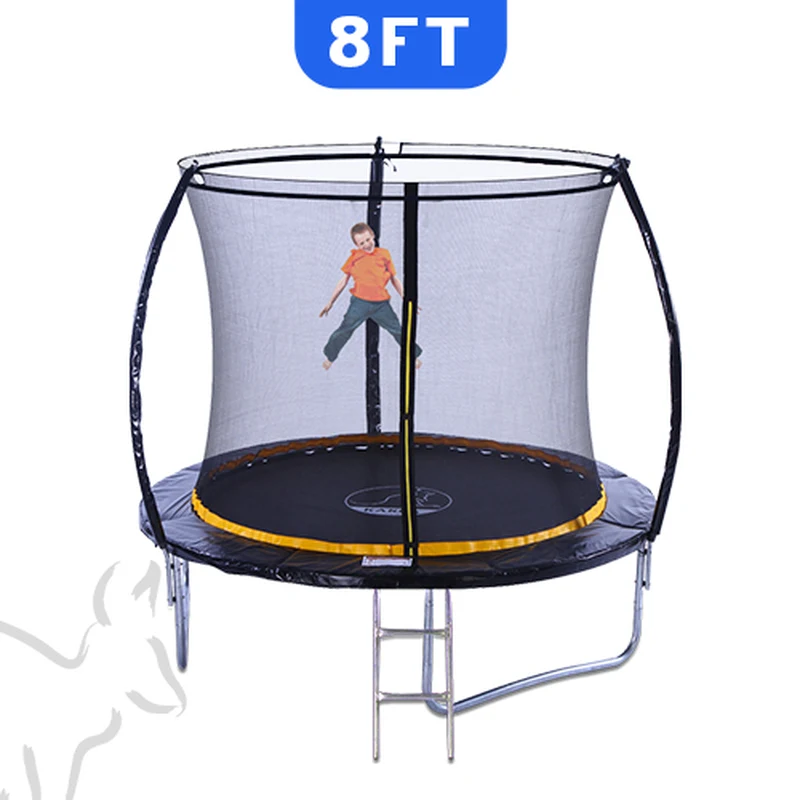
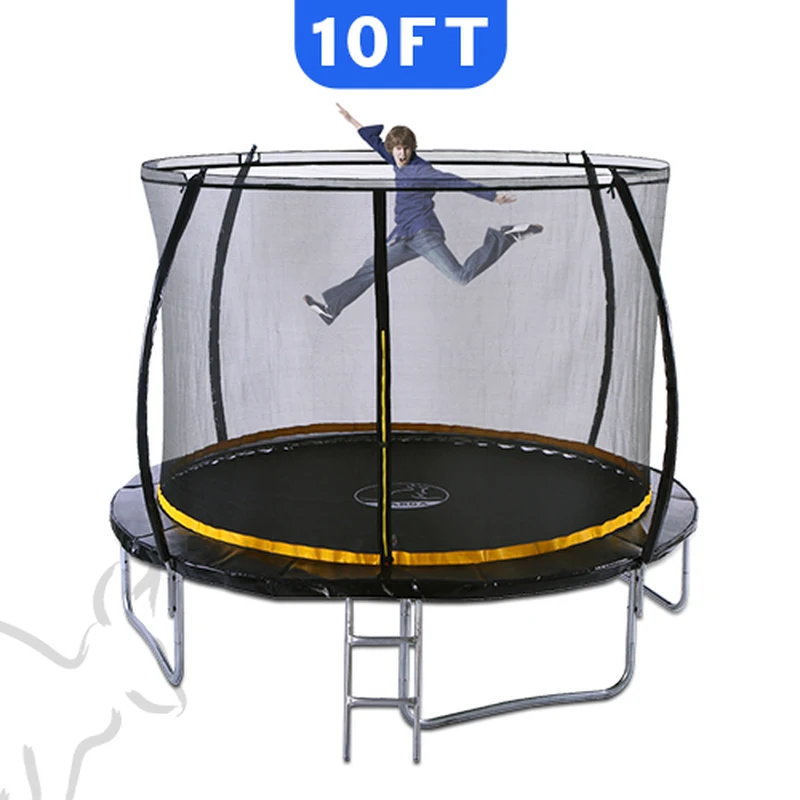
Springs are the single most common replacement part on any garden trampoline. Kanga springs are sold in matched sets sized by trampoline diameter: 36–42 for the 6ft, 48–54 for the 8ft, 64–72 for the 10ft and 72–96 for the 12ft. Always replace springs in pairs on opposite sides of the frame to keep the mat tension symmetrical, and plan to replace all the springs together once one third of them have softened.
Signs that a spring is failing include visible stretching (the spring stays longer at rest than its neighbours), a rust ring halfway down the coil, or a "dead" feel under one foot during a bounce. Springs are a wear item; a well-used Kanga typically needs a full spring set at the four-to-six-year mark.
Jumping mats
The UV-treated polypropylene mat is the second most replaced part, usually because of wear around the spring attachment rings rather than the woven centre. Stitching is triangular for strength; if you see a broken stitch line running more than 20cm, retire the mat immediately. Mats are sized to trampoline diameter and to spring count – a 10ft 72-spring mat is not interchangeable with a 10ft 64-spring mat, so always check the printed label inside the enclosure before ordering.
Spring pads and padded covers
The padded cover that sits on top of the springs is the most visible wear item on a trampoline. Sunlight degrades the PVC outer layer and the foam underneath compresses over time. Kanga replacement pads are colour-matched to the relevant size (red on the 6ft, blue on the 8ft, green on the 10ft, black on the 12ft) and come with new ties. Budget to replace the pad every three to four years, or sooner if the PVC has split.
Enclosure nets
The external safety net enclosure takes a lot of weather. Zips and net panels are available separately, though in practice most owners replace the whole net when the time comes – the labour is similar and the new net comes with fresh ties and padded pole sleeves. Look for UV-induced colour fading along the top ring, hairline splits at the zipped entrance, or stitching that has started to ladder. A two-year cycle is generous; five years is the outer edge.
Ladders, anchor kits and small parts
The hooking ladder is built to last indefinitely but can be replaced if it bends in storage. Ground anchor kits should be inspected every autumn: the corkscrew pegs survive years, the webbing straps fray at the buckles. Replace the straps at the first sign of fraying; the whole anchor kit costs less than a windblown trampoline's repair bill.
Smaller items – padded pole sleeves, net ties, frame bolts, the spring pull tool – are stocked as individual parts so you can buy only what you need. The spring pull tool is the one item every owner should keep even after assembly; you will need it when a spring eventually gives up.
Identifying the right part for your trampoline
Three pieces of information are enough to order the right spare: trampoline diameter (6ft, 8ft, 10ft or 12ft), spring count (stamped on the label inside the enclosure), and production year if the Kanga is more than five years old (some specifications have been gently updated over time). With those three numbers in hand, any Kanga spare part can be matched with confidence.
When it is time for a new trampoline instead
If the frame itself has bent, or if multiple welds have failed, a new trampoline is a safer choice than patching up the old one. Frame damage is unusual on a Kanga but can happen after a severe storm on an unanchored unit. For everything else – springs, mats, pads, nets, anchors – individual spares keep the trampoline bouncing for the long run. A full refresh at the five-year mark typically costs a fraction of a new 12ft package and leaves you with a virtually new unit.
Budgeting for spares over the trampoline's life
Families who have owned a Kanga for five years or more tend to budget for spare parts in a predictable rhythm: anchor straps at year two, a new spring pad at year three or four, a fresh set of springs at year five, and a new enclosure net at year five or six. Mats are the least predictable item – shoe wear, pet claws and storm debris can all shorten the life of a mat unexpectedly – but in normal family use a mat lasts six years or more.
The cumulative cost over a decade of Kanga ownership, if every consumable is replaced at least once, still comes in well below the price of buying the trampoline twice. That is the point of a properly supported spares catalogue: the purchase decision is a once-per-decade one, not a three-year disposable like many budget trampolines.